
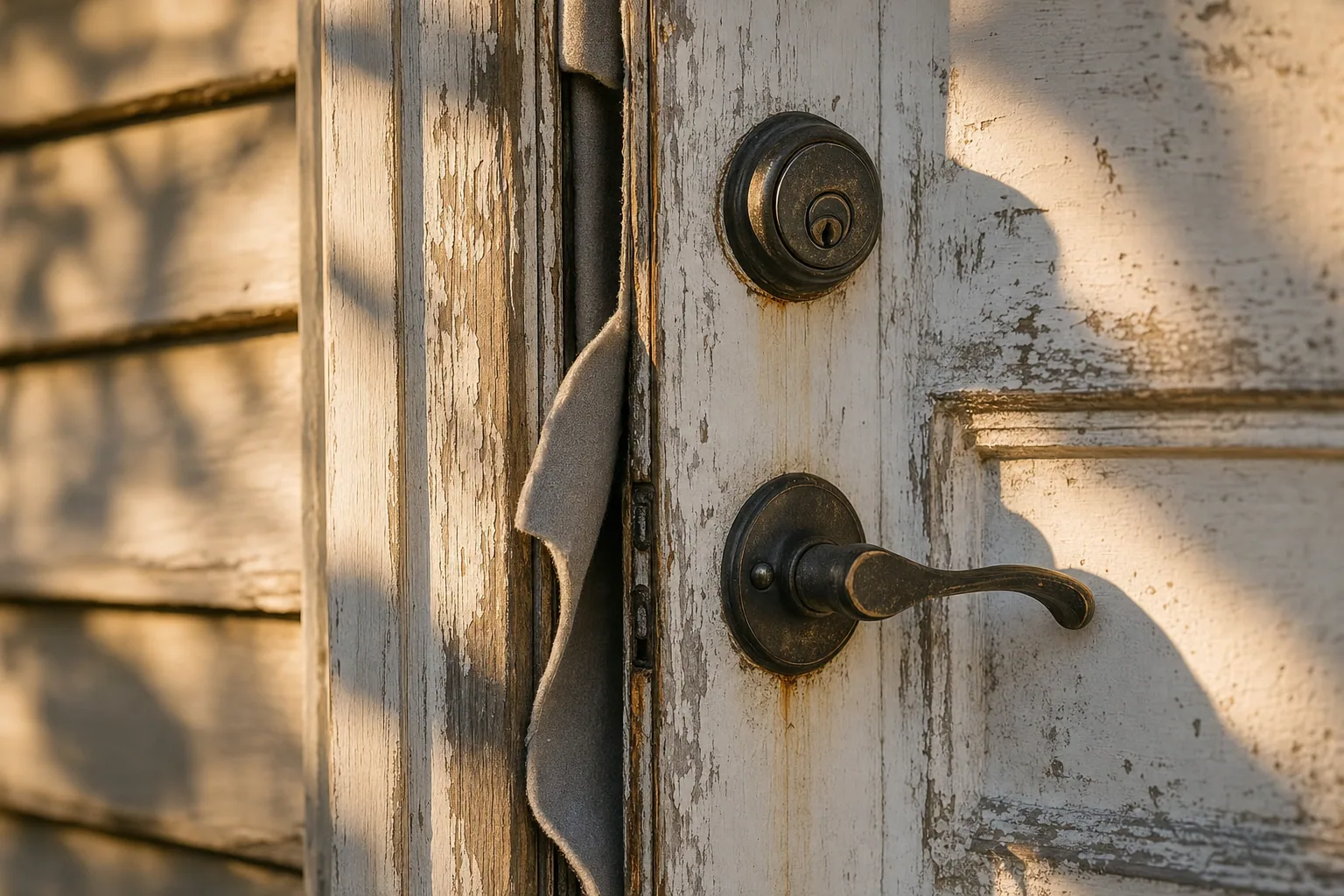
Weather stripping is one of the smartest investments a homeowner can make. It keeps cold air out in winter, reduces energy bills, and makes your home more comfortable year-round. But if weather stripping isn't installed or maintained correctly, it can actually create serious problems with your door locks and hardware.
Understanding the relationship between weather stripping and lock function will help you protect both your energy efficiency and your home security. Let's walk through what goes wrong, how to spot trouble early, and what you can do to prevent costly repairs.
How Weather Stripping Can Damage Locks
Weather stripping does its job by creating a tight seal around your door frame. The problem comes when that seal is too tight or installed improperly.
When foam or rubber stripping pushes too hard against a door, it can shift the door's alignment or add pressure against the lock mechanism. Over time, this creates friction that wears down the internal components of your deadbolt or handle. You might notice the key starts to stick, the lock feels hard to turn, or the door won't close smoothly anymore.
Moisture is another culprit. Weather stripping that traps water between the door and frame can cause corrosion on metal lock parts. Rust doesn't just look bad, it makes locks seize up and fail when you need them most.
Cheap or degraded stripping that sheds rubber fragments can also jam inside lock cylinders, making keys impossible to turn. This often happens without anyone realizing what caused it.
Warning Signs Your Locks Are Being Affected
Pay attention to these red flags:
- Your key sticks or requires extra force to turn
- The deadbolt slides slowly or feels gritty inside the door
- Your door is harder to close than it used to be
- You see rust or discoloration around the lock area
- The door frame or door itself looks warped or misaligned
- Weather stripping is visibly peeling, cracked, or shedding material
- Moisture or condensation appears near the lock
If you're experiencing any of these issues, it's time to inspect both your weather stripping and your locks. Small problems caught early are much cheaper to fix than a complete lock replacement later.
Choosing the Right Weather Stripping Material
Not all weather stripping is created equal. The material you choose makes a big difference in how well it works and how much it interferes with your locks.
Foam tape is cheap and easy to install, but it compresses over time and can shed particles. Rubber or silicone stripping lasts longer and provides better seals without the degradation issues. If you're dealing with problem locks, vinyl or rubber products are safer choices than foam.
Brush seals are excellent around doors because they move with the door and don't create binding pressure. They're particularly good if you've had lock problems in the past.
Measure carefully before you buy. Weather stripping that's too thick or applied in the wrong location will push on your lock hardware and make things worse, not better. The goal is a tight seal that doesn't interfere with how your door and locks actually function.
Installation Best Practices
Proper installation protects both your locks and your home's climate control. Follow these steps:
- Clean the door frame thoroughly and let it dry completely
- Measure the frame accurately before buying stripping
- Install stripping on the sides and top of the frame, not where it will contact the lock
- Apply it in a straight line, avoiding wrinkles or bunching
- Make sure the door closes smoothly without sticking or excessive force
- Test your lock multiple times to confirm it operates freely
- Check for gaps where air or moisture could still enter
If your door closes with difficulty after adding weather stripping, remove it immediately and reinstall it in a slightly different position. Your lock should never feel tight or resistant.
Maintenance Keeps Everything Working
Weather stripping degrades faster than you might expect. Sun, temperature changes, and moisture all break down rubber and foam over time.
Inspect your weather stripping twice a year, ideally in spring and fall. Look for gaps, compression, peeling, or separation from the frame. If the stripping is compressed flat, it's no longer sealing properly. If it's cracked or shedding, replace it right away.
Keep your locks clean and lubricated too. A light spray of silicone lubricant on your deadbolt and handle once or twice a year prevents rust and keeps everything moving smoothly. Never use WD-40 on locks, as it attracts dirt and can actually gum things up inside.
If you notice your lock starting to stick or resist, clean the key and cylinder with a dry cloth first. If that doesn't help, it's time to call a professional locksmith before the problem gets worse.
When to Call a Locksmith
If your locks are already showing signs of wear from weather stripping problems, don't wait for a complete failure. Joe's Lock and Key offers professional lock repair and can help you understand if your issue is from weather stripping damage or something else entirely.
When you call, describe what you're experiencing. Tell us about your weather stripping situation. We can assess the damage, recommend solutions, and even advise you on how to fix your weather stripping so the problem doesn't happen again. With over five decades of experience, we've seen how weather and installation mistakes affect locks in homes across the Bakersfield area.
Sometimes a simple cleaning and lubrication is all you need. Other times, the lock components are damaged and need replacement. Either way, getting professional help early saves you money and keeps your home secure.
Weather stripping is absolutely worth having, but only when it's installed correctly and maintained regularly. Your locks and your comfort both depend on finding that balance. Take time to do it right, check it twice a year, and your doors will function smoothly for years to come.