
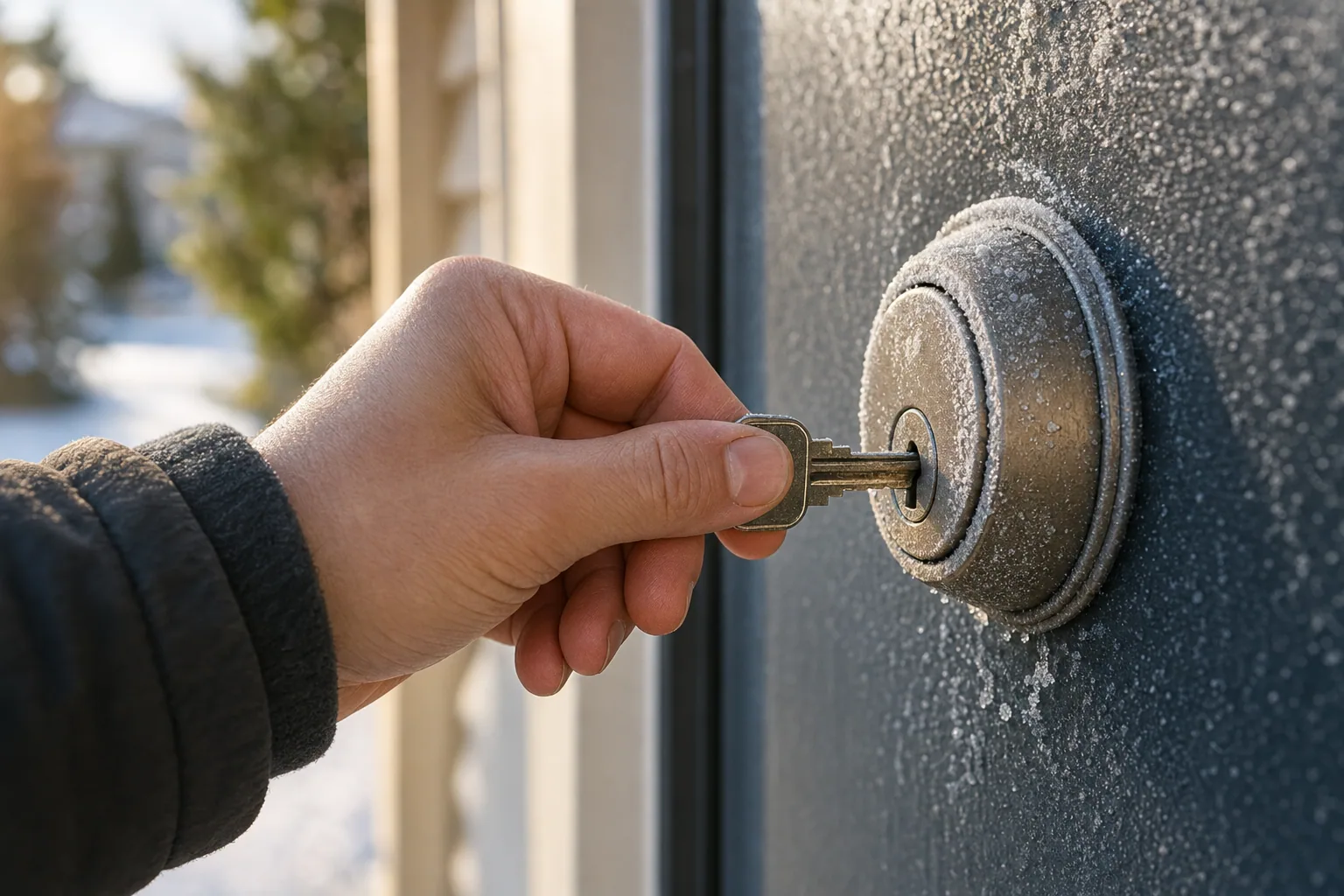
A jammed lock can happen at the worst possible time. Whether your door won't budge on a freezing morning or a lock has seized up from years of use, a stuck lock is more than just annoying. It blocks access to your home, car, or business and can leave you feeling trapped.
The good news: most stuck locks can be fixed without replacing the entire mechanism. Understanding why locks get stuck and knowing the right steps to free them safely will save you time, money, and frustration.
Why Door Locks Get Stuck
Locks jam for several reasons, and identifying the cause helps you choose the best solution.
Rust and corrosion are common culprits, especially in older homes or locks exposed to moisture. Moisture inside the lock cylinder causes internal pins and springs to corrode, making the lock stiff and hard to turn.
Dirt and debris accumulate inside the lock over time. Dust, lint, and other particles clog the mechanism and prevent the key from turning smoothly.
Frozen locks occur in cold weather when moisture inside the lock freezes. This is especially common in areas with harsh winters, and it's one of the most frustrating types of stuck locks because you can't force it without damaging the mechanism.
Misaligned door frames sometimes cause locks to bind. If your door has shifted slightly due to settling or weather changes, the lock cylinder may not align properly with the strike plate, making it harder to turn or open.
Worn or damaged keys can also create problems. If your key is bent, worn, or broken, it may not engage the internal pins correctly, making the lock feel stuck even though the lock itself is fine.
How to Fix a Stuck Lock Safely
If your lock is stuck, try these methods before calling for professional help. The key is to avoid forcing anything, which could break the key inside or damage the lock further.
Step 1: Try Graphite Powder
Graphite is a dry lubricant that works well in locks without leaving sticky residue that attracts dirt. Insert the graphite powder directly into the keyhole and work the key in and out several times. This often frees up minor binding without damaging anything.
Avoid WD-40 or other liquid oils inside the lock. Liquids can harden and trap dust, making things worse over time.
Step 2: Apply Penetrating Oil to the Door Frame
If the problem is a misaligned frame or binding hinges, apply a penetrating oil around the lock cylinder and door edges. Let it sit for 10 to 15 minutes, then gently wiggle the key and handle. This can help loosen things up without forcing.
Step 3: Check Your Key
Inspect your key for bending or damage. Try a duplicate key if you have one. If the duplicate works smoothly, your original key is the problem, not the lock.
Step 4: Thaw a Frozen Lock Carefully
For frozen locks, never use boiling water, which can damage the lock mechanism and your door finish. Instead:
- Use a heat gun or hair dryer on low setting, holding it a few inches from the keyhole for 2 to 3 minutes
- Breathe warm air onto the key and keyhole
- Place a warm (not hot) cloth over the lock area
Once the lock thaws slightly, insert your key gently and try turning it with minimal force.
When to Call a Professional
If you've tried these steps and the lock remains stuck, or if you hear grinding sounds or feel significant resistance, stop and call a locksmith. Forcing a stuck lock can break your key inside the cylinder, requiring expensive lock removal and replacement.
At Joe's Lock and Key, we handle stuck locks regularly and can diagnose whether your lock needs repair or replacement. We also offer lock replacement services if your current lock is beyond repair. With over five decades of experience, we can get you back inside quickly and safely.
Preventing Stuck Locks
The best way to avoid stuck lock problems is to maintain your locks before they fail.
Keep locks clean. Use a dry brush to gently clean around the keyhole and remove visible dust or debris. This prevents accumulation inside the mechanism.
Lubricate regularly. Apply graphite powder to your locks once or twice a year, especially on locks you use frequently. This keeps the mechanism smooth and prevents rust.
Check your door alignment. Make sure your door frame hasn't shifted and that the door closes smoothly without binding at the top or bottom. If alignment is off, a locksmith can adjust the strike plate or hinges.
Inspect keys. Worn or damaged keys cause locks to feel stuck. If your key feels loose in the lock or doesn't turn smoothly, have it replaced or use a duplicate.
Protect locks from moisture. If you have exterior locks, consider installing a cover or canopy to keep rain and snow off the lock. For vehicles, keep door locks dry and address water leaks promptly.
Replace old locks. Locks that are more than 20 to 30 years old are more prone to corrosion and sticking. If you're upgrading your security anyway, newer locks are smoother and more reliable.
Residential and Commercial Lock Care
The same principles apply whether you're caring for a home or business lock. However, commercial spaces often have higher-traffic locks that wear out faster. If your business has multiple entry points, scheduling regular maintenance with a professional locksmith can catch problems before they affect your operations.
Joe's Lock and Key provides residential lock services for homeowners who want to maintain their doors and protect their families. We also handle commercial lock maintenance for business owners looking to keep their properties secure and accessible.
Don't Let a Stuck Lock Catch You Off Guard
A stuck lock doesn't have to become a crisis. With the right approach, you can free most locks and prevent future problems with simple maintenance. For locks that resist your efforts or show signs of serious damage, professional help is just a phone call away.
If you're in Bakersfield, Shafter, Wasco, Delano, or the surrounding areas and need help with a jammed lock, contact Joe's Lock and Key today. We're available 24/7 for emergencies and offer honest pricing with no hidden fees. Let us help you get back inside quickly and keep your locks working smoothly for years to come.