
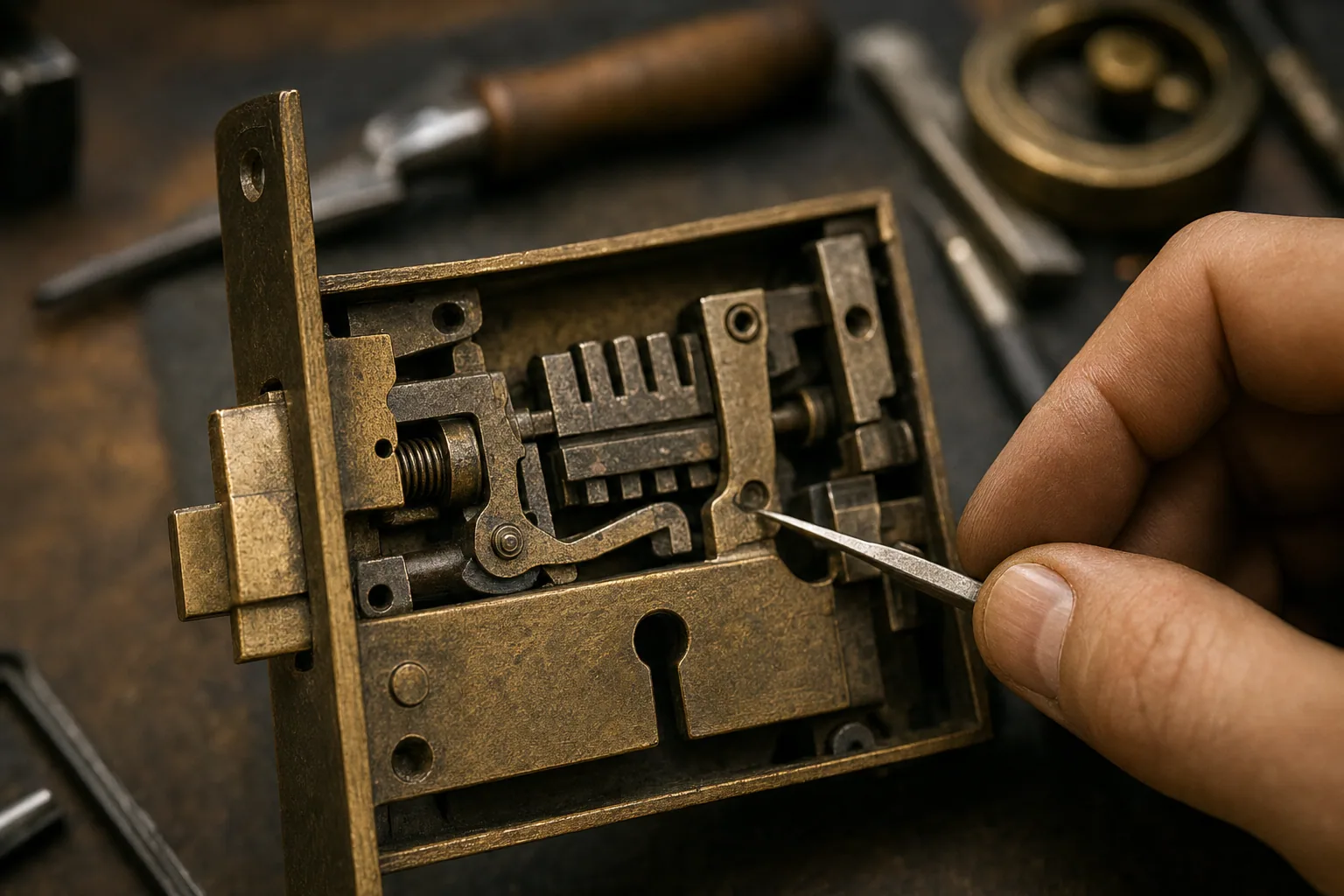
Mortise locks are a staple in older homes and many commercial buildings throughout Bakersfield and surrounding areas. These robust, heavy-duty locks are built to last decades, but like any mechanical device, they can develop problems. Understanding what causes mortise lock issues, how they work, and when to call a professional can save you time, money, and frustration.
How Mortise Locks Work
Unlike surface-mounted locks, a mortise lock is built into the door itself, recessed into a pocket called a mortise. The lock body sits inside the door frame, with the keyhole and bolt mechanism all contained within. This design makes mortise locks incredibly durable and tamper-resistant, which is why they remain popular in both residential and commercial applications.
The mechanism relies on a series of internal springs, pins, and tumblers that align when the correct key is inserted. Once aligned, the bolt extends or retracts to secure or release the door. Because all these parts are hidden inside the door, mortise locks require more precision in manufacturing and installation compared to simpler pin-tumbler locks.
Common Mortise Lock Problems
Even well-made locks can experience wear over time. Here are the issues homeowners and business owners in Bakersfield most commonly face:
Stuck or Stiff Keys If your key is hard to turn in a mortise lock, internal components may be binding. This could be due to dust accumulation, rust, or misaligned tumblers. Forcing a stuck key can break it inside the lock, creating a more serious problem.
Bolt Won't Fully Extend or Retract When the bolt gets stuck partway, it's often a sign that springs inside the lock are weakening or internal parts have shifted out of alignment. This makes your door unsafe and unusable.
Key Turns but Bolt Doesn't Move This frustrating problem usually means the internal cam or tailpiece has broken or disconnected from the bolt mechanism. The lock appears to work, but nothing happens when you turn the key.
Loose or Wobbly Lock Assembly If the lock feels loose in the door, fasteners may have worked free, or the door frame itself could be warping. A loose mortise lock is a security risk and should be addressed promptly.
Difficulty Locking or Unlocking from One Side This often indicates uneven wear or a bent bolt. Deadbolts should operate smoothly from both sides, and any resistance suggests internal damage.
Why Mortise Locks Get Stuck
A mortise lock stuck in place is more than just an inconvenience. Several factors contribute to this problem:
- Rust and corrosion: If moisture enters the lock body, internal metal components oxidize and bind together.
- Debris buildup: Dust, dirt, and lint accumulate inside over years of use, gumming up the mechanism.
- Lack of lubrication: Mortise locks need occasional lubrication, but too much oil attracts dust and can cause buildup.
- Worn springs: Springs lose tension over time, causing parts to bind or stick in place.
- Door settling: As houses age, doors can settle unevenly in their frames, putting pressure on the mortise lock and causing it to stick.
- Manufacturing defects: In rare cases, a mortise lock may have been poorly manufactured or installed incorrectly from the start.
When to Attempt a DIY Fix
Some minor mortise lock issues can be resolved without professional help, but approach carefully:
- Apply a small amount of graphite powder (not oil) to the keyhole and work the key in and out gently. Graphite lubricates without attracting dirt.
- If the lock is visibly dirty, try carefully cleaning around the keyhole with a dry cloth.
- Check that all visible bolts and screws holding the lock assembly are tight.
Beyond these simple measures, attempting repairs yourself risks damaging the lock further or breaking your key inside. Mortise locks contain many small, precision-engineered parts that require specialized knowledge to service properly.
Why Professional Mortise Lock Repair Matters
A professional locksmith has the tools, knowledge, and experience to diagnose mortise lock problems accurately. When you call Joe's Lock and Key for residential lock repair in Bakersfield, you're getting someone who understands how these mechanisms work and can fix them right the first time.
Professional repair usually costs far less than replacing an entire lock, especially if the lock is original to an older home or part of a matched set. A skilled locksmith can often restore a mortise lock to working condition with internal adjustments and component replacement.
When Replacement is the Better Option
Sometimes a mortise lock is simply too damaged to repair. Consider replacement if:
- The lock has been in use for 30+ years and fails regularly
- Multiple internal components are broken or corroded beyond repair
- The cost of repair approaches or exceeds the cost of a new lock
- You want to upgrade to a modern mortise lock with improved security features
- The original lock is incompatible with modern key blanks or has an obsolete design
If you decide to replace your mortise lock, a professional locksmith can ensure the new lock fits properly in the existing mortise cavity and operates smoothly. This is especially important because mortise pockets are custom-cut for each lock, and a poor fit creates security gaps.
Preventing Mortise Lock Problems
Proactive maintenance extends the life of your mortise locks:
- Keep keys clean and avoid applying excessive force when turning them.
- Avoid using graphite lubricants excessively, as buildup can cause problems over time.
- Have locks inspected annually if they're in heavy-use areas like commercial buildings.
- Address door alignment issues promptly. A door that sticks or doesn't close evenly puts stress on the mortise lock.
- Keep the keyhole and surrounding door area clean and dry.
Trust a Local Expert with Your Mortise Lock Problems
Mortise locks deserve expert attention. Whether your lock is stuck, damaged, or just needs preventive maintenance, Joe's Lock and Key has the experience to help. With over five decades in the locksmith business, we've repaired countless mortise locks throughout Bakersfield and the surrounding areas.
When you need mortise lock repair or have questions about your lock's performance, reach out to us. We're available 24/7 for emergencies and work with both residential and commercial customers. No hidden fees, no surprises, just honest locksmith service you can count on.