
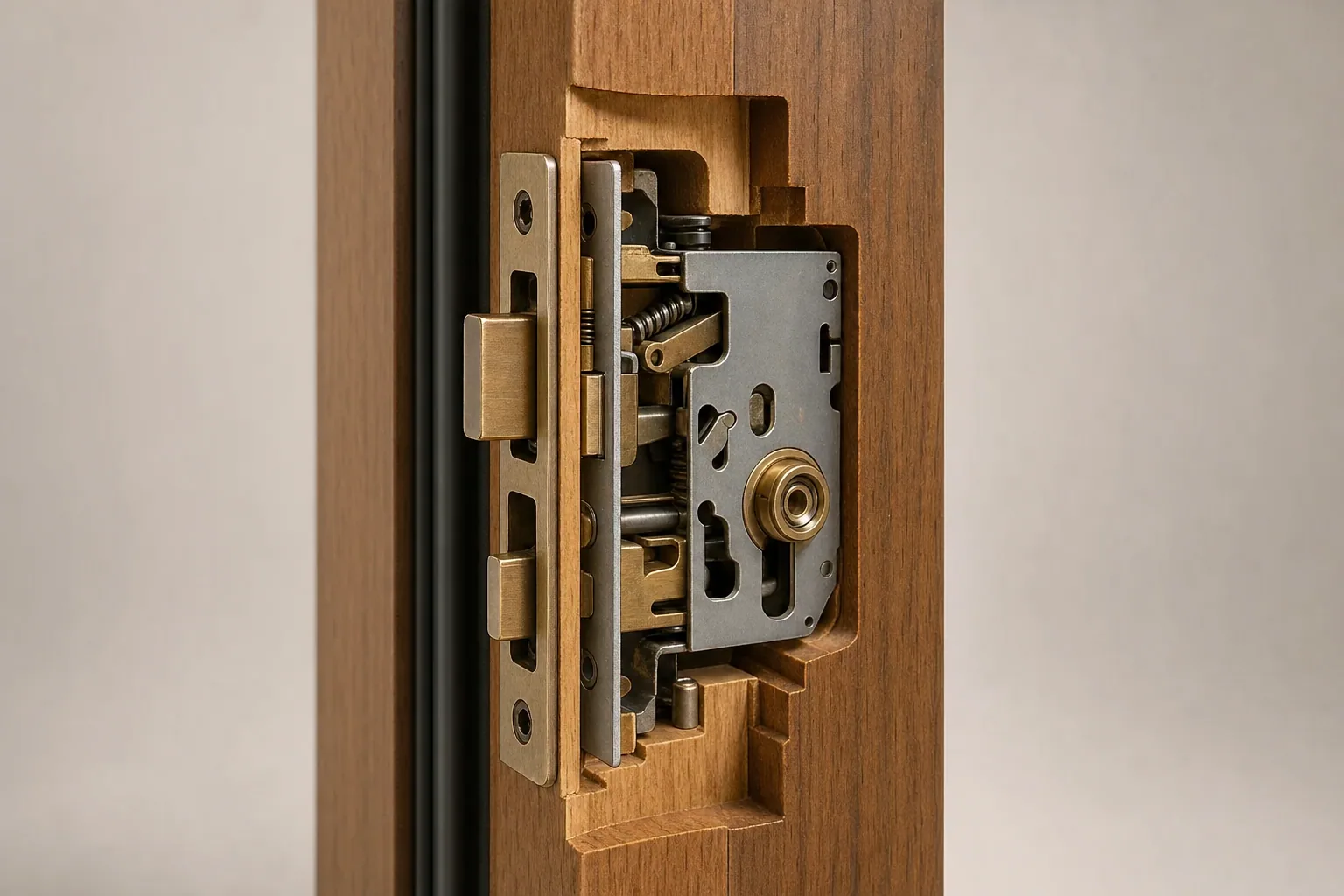
Understanding Mortise Locks
If you're upgrading your home's security or maintaining a commercial property, you've likely heard the term "mortise lock" thrown around. But what exactly is a mortise lock, and why do so many homeowners and business owners choose them over other locking mechanisms?
A mortise lock is a type of lock mechanism that's built directly into the door itself, rather than being attached to the surface. The lock sits inside a carved-out cavity, or mortise, within the door frame. This design has been used for decades and remains one of the most reliable and secure locking options available today.
What Is a Mortise Lock?
A mortise lock is a locking mechanism that's installed by creating a rectangular cavity in the edge of a door. The entire lock body fits inside this cavity, with only the knob, keyhole, and bolt visible on the outside. The lock typically includes both a latch and a bolt, making it more complex and secure than simpler surface-mounted locks.
The name "mortise" comes from the woodworking term for the rectangular hole itself. When you mortise a door, you're essentially creating a pocket that holds the lock mechanism. This integrated design gives mortise locks their distinctive appearance and their reputation for durability.
Mortise locks have been around for over a century, and they remain popular in both residential and commercial settings. You'll often find them on older homes, office buildings, and shops where security and longevity are priorities.
How Does a Mortise Lock Work?
Understanding how a mortise lock functions helps explain why they're so trusted. The mechanism is actually quite clever in its design.
When you turn the key in the lock or engage the handle, you're triggering a series of internal components:
- The key or handle activates the cylinder, which contains the lock pins
- When the correct key is inserted, the pins align, allowing the cylinder to turn
- This rotation engages the bolt mechanism, which extends into the door frame to secure the door
- A spring mechanism allows the bolt to retract when unlocked
Mortise locks typically have two separate bolt components: a latch bolt and a deadbolt. The latch bolt catches automatically when the door closes, while the deadbolt requires manual engagement with a key or thumb turn. This dual-bolt design provides greater security than locks that use only a simple latch.
The internal springs and levers inside a mortise lock are built to last, which is why these locks often outlive the doors they're installed on.
Mortise Lock vs Deadbolt: Key Differences
If you're deciding between a mortise lock and a traditional deadbolt, it helps to understand how they differ.
Deadbolts are surface-mounted or partially recessed into the door. They're simpler, less expensive, and easier to install. However, deadbolts only provide one locking mechanism (the bolt itself) without a latch component.
Mortise locks, by contrast, are fully recessed into the door and include both a latch and a deadbolt. This means they provide redundant locking points. Even if one mechanism fails, the other can still secure your door. Mortise locks are also more difficult to tamper with because the majority of the mechanism is hidden inside the door.
Mortise locks do require more complex installation because the door must be mortised to accommodate them. This is why many older homes have them built in from the start. If you're adding mortise lock security to an existing door, you'll need a professional locksmith to properly install it.
For homeowners seeking additional security, a mortise lock replacement can be a worthwhile upgrade. For commercial properties, they're often the default choice because of their durability and the professional appearance they provide.
When Should You Consider a Mortise Lock Replacement?
Mortise locks are built to last, but eventually they may need repair or replacement due to wear, damage, or changing security needs.
You might need a mortise lock replacement or repair if you experience:
- A key that no longer turns smoothly in the lock
- A bolt that sticks or doesn't fully retract
- A handle that's loose or unresponsive
- Keys that have been lost or stolen
- Damage from attempted break-ins
- Locks that are simply too old and unreliable
Mortise lock repair is sometimes possible if the damage is minor, such as a broken spring or misaligned bolt. However, if the lock cylinder is damaged or the internal mechanism is worn beyond repair, replacement is usually the best option.
If you're dealing with a stubborn mortise lock or uncertain whether yours needs repair or full replacement, Joe's Lock and Key can help. Our experienced team handles residential and commercial locksmith services, including lock repair and replacement for all types of door locks.
Mortise Locks in Commercial Settings
In commercial environments, mortise locks are the industry standard for good reason. Office doors, storefronts, and business entrances frequently feature mortise locks because of their proven security and reliability.
Commercial mortise locks often come with additional features such as:
- Keying systems that allow master keys to open multiple locks
- Anti-pick and anti-bump technology
- Heavy-duty construction designed to withstand heavy use
- Fire-rated options for compliance with building codes
- Integration with access control systems
For businesses looking to upgrade security or maintain aging lock systems, professional locksmith services are essential. A qualified commercial locksmith can assess your lock needs, recommend appropriate mortise lock options, and handle professional installation or repair.
Maintaining Your Mortise Lock
Proper maintenance helps your mortise lock last for decades. Simple steps include:
- Keeping the lock clean and free of dirt or debris
- Lubricating the mechanism occasionally with a dry lubricant like graphite powder
- Never forcing a key if it doesn't turn smoothly, which can cause internal damage
- Having any problems addressed promptly by a professional locksmith
Regular maintenance is far less expensive than dealing with a completely failed lock that leaves you locked out or unable to secure your property.
Get Professional Help When You Need It
Whether you need mortise lock repair, replacement, or advice on upgrading your property's security, having a trusted local locksmith makes all the difference. At Joe's Lock and Key, we've been serving Bakersfield, Shafter, Wasco, Delano, and surrounding areas for over five decades. We handle residential and commercial locksmith services with honest pricing, no hidden fees, and fast response times.
If you're dealing with a lock problem or considering a security upgrade, give us a call at 661-588-4495. We're available 24/7 for emergencies, and we're happy to discuss your options in person, not through a remote call center.