
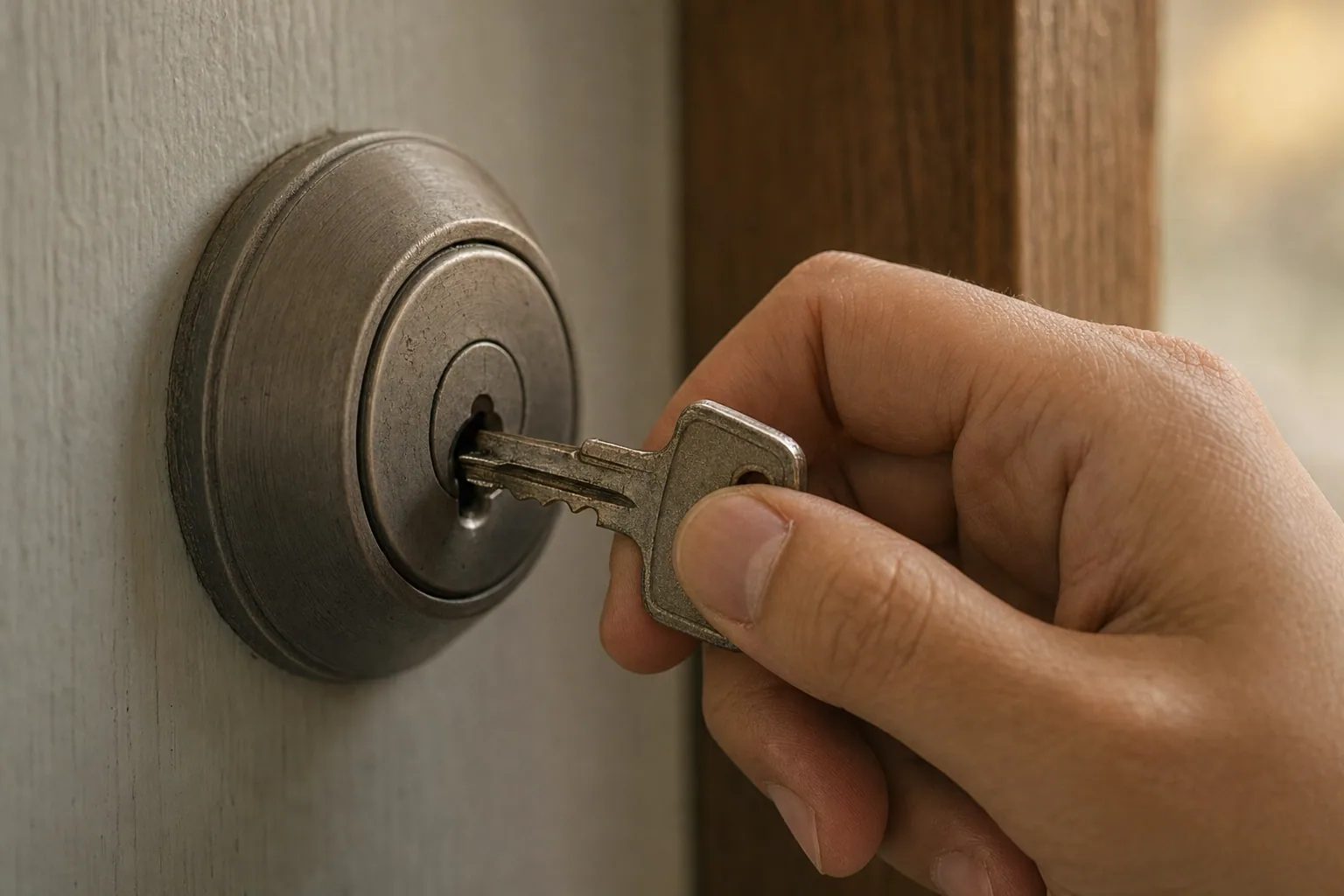
There's nothing more frustrating than inserting your key into a lock and finding it won't budge. Whether you're trying to get into your home, office, or car, a key that won't turn can disrupt your entire day. The good news is that this problem usually has a clear cause, and many solutions are simple enough to try before calling in a professional.
Let's walk through why this happens and what you can do about it.
Why Your Key Won't Turn
When a key won't turn in a lock, something is preventing the internal components from moving freely. Here are the most common culprits:
Dirt and debris buildup. Locks accumulate dust, dirt, and small particles over time, especially if they're not used frequently or are exposed to outdoor elements. This grit lodges inside the mechanism and creates friction, making it harder for the key to turn.
Rust or corrosion. Moisture is a lock's enemy. If your lock has been exposed to rain, humidity, or salt air, the internal metal parts can rust. Even small amounts of corrosion can make the key feel stuck or grinding as it rotates.
A worn or misaligned key. Your key might be slightly bent or worn down from years of use. If the cuts on the key no longer match the lock's pins precisely, it won't turn smoothly or at all.
A damaged lock cylinder. The lock mechanism itself may be broken, with bent pins or other internal damage preventing normal operation.
Frozen locks. In cold weather, moisture inside the lock can freeze, creating ice crystals that block movement. This is why stuck keys are especially common during winter months in the Bakersfield area's occasional cold snaps.
Safe Steps to Try First
Before you force anything, try these gentle approaches to free up a stuck key:
-
Apply a lubricant. Graphite powder is the gold standard for locks because it doesn't attract dust like oil does. Spray it into the keyhole, insert the key gently, and work it back and forth a few times without forcing it. If you don't have graphite, a silicone-based spray lubricant can work, though avoid WD-40, which can gum up over time.
-
Try gentle rocking motions. Don't yank your key. Instead, apply light pressure while gently wiggling it up and down or side to side. Sometimes this helps realign the pins just enough to release tension.
-
Clean the keyhole. Use a thin tool like a straightened paperclip or a specialized lock pick to carefully remove visible debris from the keyhole. Be gentle to avoid scratching the lock's interior.
-
Warm a frozen lock. If it's cold outside and you suspect ice is the problem, apply heat carefully. Warm water, a heat gun on low setting, or even breath directed into the keyhole can help. Never use a blowtorch or extreme heat, which can damage the lock.
-
Check your key. Look closely at your key under good lighting. If it appears bent, it might not fit properly anymore. Try a spare key if you have one to determine whether the issue is the lock or the key itself.
When to Call a Professional Locksmith
If gentle attempts don't work, stop and call for help. Forcing a stuck key can break it off inside the lock, making the situation much worse. You might also permanently damage the lock, requiring a full replacement rather than a simple repair.
A professional locksmith has the right tools and experience to diagnose the exact problem without causing damage. They can perform lock repair and replacement if needed, or extract a broken key safely. If you live in the Bakersfield area, Joe's Lock and Key offers emergency locksmith services with fast response times, so you won't be stuck waiting around.
Preventing Future Stuck Keys
Once your lock is working again, take steps to avoid this problem in the future:
Lubricate regularly. Use graphite powder in your locks twice a year, more often if you're in a dusty or humid climate. Regular maintenance prevents buildup that causes sticking.
Protect outdoor locks. If you have exterior locks, consider installing protective covers or weather-resistant lock plates that shield the keyhole from rain and debris.
Replace worn keys. If a key is bent or shows visible wear, have it duplicated or replaced before it causes problems. Key duplication is inexpensive compared to lock repairs.
Keep spares handy. Having a spare key stored safely means you can test whether the problem is the key or the lock, and you won't be stranded if your primary key fails.
Consider upgrading old locks. If you have vintage locks or ones you've owned for decades, they're more likely to stick. Modern locks are built to tighter tolerances and resist wear better. A residential lock installation or upgrade can save you headaches down the road.
What If Your Key Breaks Off Inside the Lock?
If you've already tried turning your key and part of it snapped off inside the lock, don't panic. This is actually more common than you might think, and professionals handle broken key extraction regularly. Never try to dig the broken piece out with tools like tweezers or pliers, as you'll likely damage the lock further or push the key deeper inside.
Instead, call a locksmith right away. They have specialized extraction tools designed to safely remove broken key fragments without harming the lock mechanism. With professional help, you can usually preserve the lock and avoid the cost of replacement.
The Bottom Line
A key that won't turn is usually fixable, but the solution depends on the underlying cause. Start with gentle troubleshooting, and if nothing works, reach out to a professional. The longer you wait or the more force you apply, the greater the risk of breaking your key or damaging your lock permanently.
If you're in Bakersfield, Shafter, Wasco, Delano, or the surrounding areas and need expert locksmith help, Joe's Lock and Key is available 24/7 for emergencies. We handle everything from simple jammed locks to complex extractions and replacements, with honest pricing and no hidden fees. Give us a call when you need fast, reliable service from someone who actually knows the trade.