
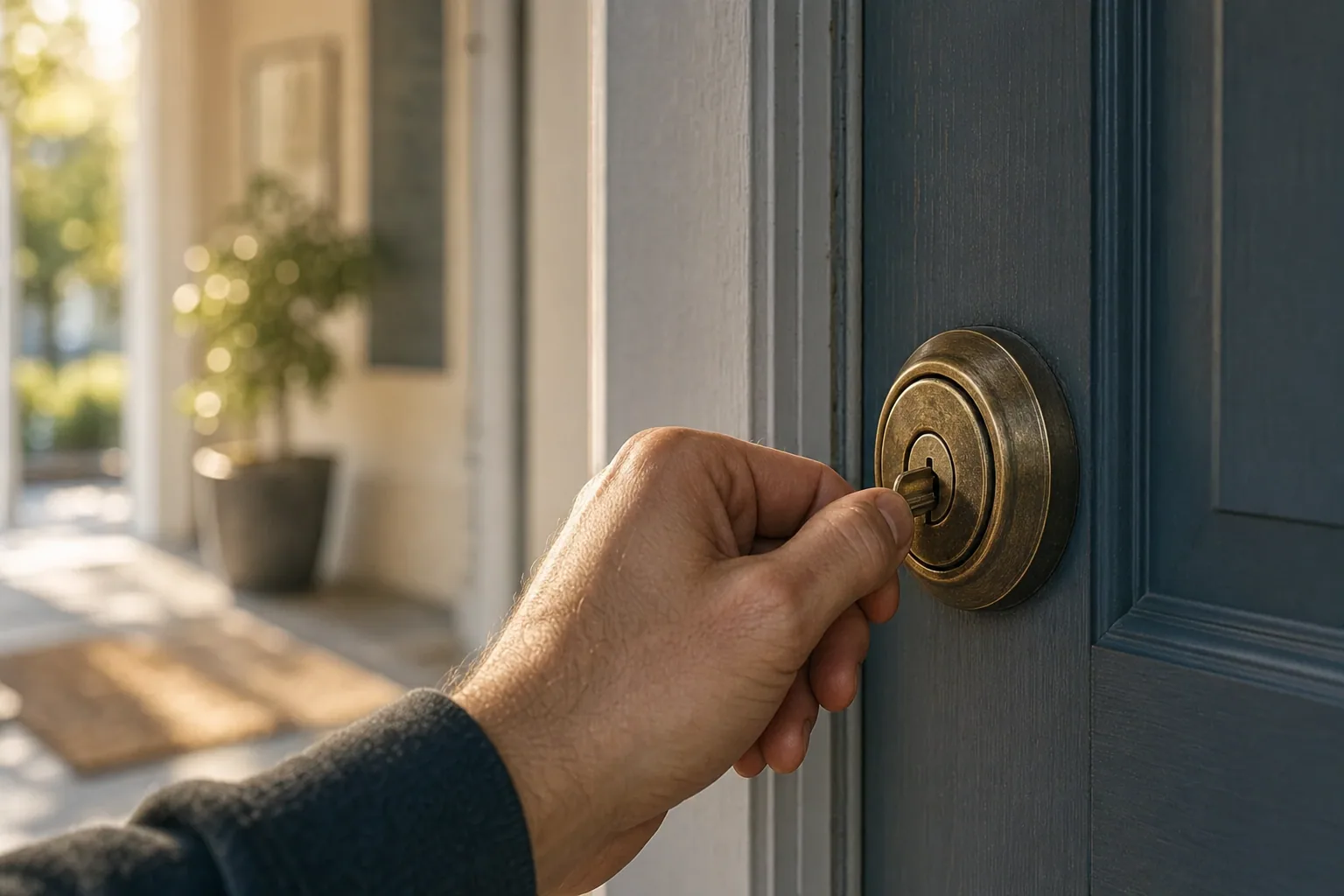
A stuck door lock can throw off your whole day. You're in a hurry, you turn your key, and nothing. The lock won't turn. It's frozen somewhere between locked and unlocked, and you're standing there wondering if you're about to get locked out or if you're going to damage something trying to force it.
The good news: most stuck locks have a reason, and many can be freed without calling a locksmith right away. But knowing when to try a fix yourself and when to reach out for professional help is important.
Why Your Door Lock Won't Turn
A door lock stuck in place rarely happens for no reason. Understanding what's causing the jam helps you decide what to do next.
Dirt and dust buildup is one of the most common culprits. Over time, lint, pet hair, and debris work their way into the lock mechanism. When moisture gets in there, it can bind everything up. You'll often notice the key turns with more resistance than it used to.
Rust and corrosion create the same problem, especially with older locks or locks exposed to weather. If your lock lives outside or in a damp climate, oxidation eats away at the tiny metal pins and springs inside, making them stick.
A bent or damaged key won't turn freely either. If you've been using the same key for years, wear and tear can warp it just enough that it binds inside the lock. The same applies if you've ever forced a key or used too much pressure.
Finally, misalignment from a loose door frame or a door that's settled can throw the latch and strike plate out of sync. When the door isn't hanging right, the lock mechanism can't operate smoothly.
Quick Fixes You Can Try at Home
Before you assume your lock is ruined, try these simple steps.
Start with lubrication. Don't use WD-40 or general-purpose oils, which attract dust and gum up the works. Instead, use a graphite-based lubricant or a silicone spray made for locks. Spray a small amount directly into the keyhole, then insert your key and work it back and forth gently a few times. This helps the lubricant coat the internal pins and springs. Let it sit for a minute, then try turning the key normally.
If that doesn't work, try cleaning out the lock. Sometimes a blast of compressed air from a can will dislodge loose debris. Aim the nozzle into the keyhole and give it a few short bursts. Follow up with graphite lubricant afterward.
Check your key itself. If you have a spare key that's newer or less worn, try that one. A slightly warped key can be the entire problem, and using a fresh one will tell you right away.
Make sure the door frame isn't the issue. Look at the door from the side to see if it's sitting square in its frame. If the top or bottom is pressed harder against the frame on one side, that pressure can make the lock bind. Try pushing gently on the door while turning the key, or shimming it slightly to realign it.
Don't force the key. If you feel serious resistance, stop. Pushing hard risks breaking the key inside the lock, which creates a much bigger problem.
When to Call a Professional
If your door lock stuck situation doesn't improve after trying these steps, it's time to reach out.
A professional locksmith can disassemble the lock, clean out stubborn corrosion, replace worn pins, or service the mechanism. If the lock is damaged beyond repair or the security risk is too high, they can install a new one. For commercial properties or high-security needs, they may recommend a smart lock or upgraded system.
If the key broke inside the lock, you definitely need professional help. Trying to fish it out yourself usually causes more damage.
If your lock is part of a set that you've had rekeyed before, or if you need that specific key duplicated, a locksmith can handle both. They can also examine whether your door frame is misaligned and fix that root cause while they're at it.
Prevention: Keep Your Locks Working Smoothly
A little maintenance goes a long way.
Apply graphite lubricant to your outdoor locks once or twice a year, especially before winter. Indoor locks usually need it less often, but a light application every year or two keeps things smooth.
Keep keys in good condition. Don't bend them, don't use them to open paint cans, and don't force them past resistance. If a key doesn't turn smoothly, get a new one cut before the old one breaks.
Wipe down your lock and key if they've gotten wet or been exposed to salt spray. Dry them thoroughly and apply a tiny bit of lubricant.
Check that your door is still hanging square in its frame. Doors can shift over time, especially in older homes or after settling. If you notice your door feels tight or binds slightly when opening or closing, have someone look at the frame alignment.
Replace locks that are really old or showing visible rust. Modern locks are usually cheaper than you'd think, and they're far more reliable than limping along with a 20-year-old mechanism.
Smart Locks as a Modern Solution
If you find yourself constantly wrestling with a sticky old lock, it might be time to upgrade. Smart locks eliminate the mechanical key-in-lock problem altogether. You unlock your door with a code, a card, your phone, or even your fingerprint. No key to wear out, no lock mechanism to jam.
If you're interested in upgrading your home or business security, a locksmith can discuss options for smart lock installation and help you choose one that fits your needs.
Get Help From a Local Locksmith
Stuck locks are frustrating, but they're rarely catastrophic. Many can be freed with a little graphite lubricant and patience. But if the problem persists, the lock is damaged, or you just want a professional opinion, Joe's Lock and Key is here to help.
We're a licensed, locally owned locksmith serving Bakersfield, Shafter, Wasco, Delano, and surrounding areas. Whether you need lock repair, a new key cut, or a complete system upgrade, we provide fast, honest service with no hidden fees. Available 24/7 for emergencies.
Call 661-588-4495 or reach out to discuss your lock problem. We'll get you sorted out quickly and fairly.