
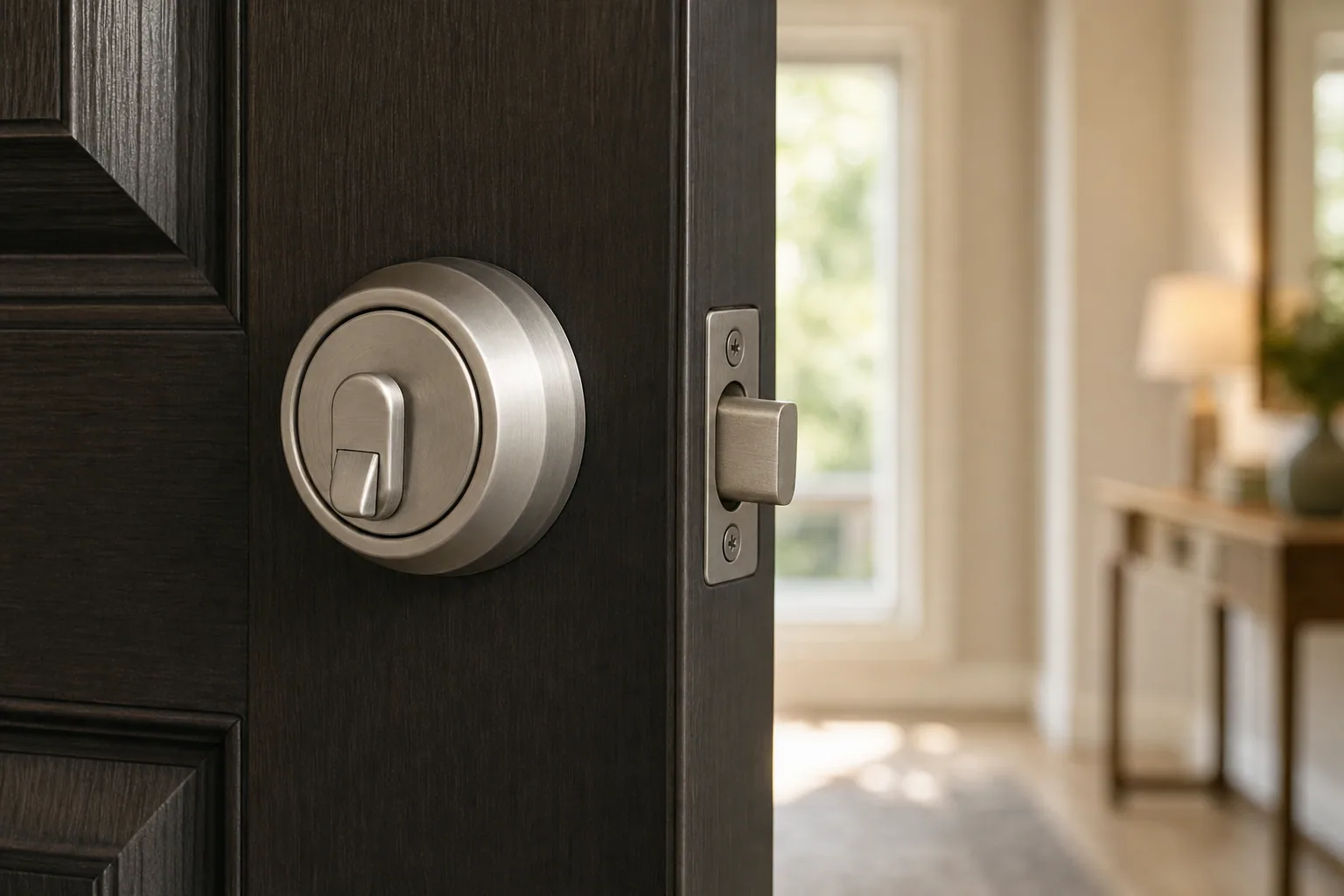
When you think about home security, one of the first things that comes to mind is the lock on your front door. And for good reason. A solid deadbolt lock is one of the simplest and most effective ways to protect your home from unwanted entry.
But not all deadbolts are created equal, and many homeowners aren't sure whether they have the right one, how to install one, or what they should expect to pay. This guide covers the basics of residential deadbolts and what you need to know to make a smart choice for your home.
Why Deadbolts Matter for Your Home
A deadbolt lock is different from the spring bolt that comes built into most door knobs. The spring bolt retracts easily when pressure is applied, which is why it's vulnerable to forced entry. A deadbolt, on the other hand, extends fully into the door frame and requires a key or thumb turn to retract. It simply cannot be pushed in.
That's what makes a deadbolt so valuable. A quality deadbolt is a physical barrier that deters most casual attempts at breaking in and adds a genuine layer of security to your home. If your front and back doors don't have deadbolts, installing them should be a priority.
Many insurance companies and security experts recommend deadbolts on all exterior doors. It's one of the most cost-effective security upgrades you can make.
Types of Residential Deadbolts
Not every deadbolt is the same. Here are the main types you'll encounter:
- Single-Cylinder Deadbolts: Operated by a key on the outside and a thumb turn on the inside. This is the most common type for residential doors.
- Double-Cylinder Deadbolts: Require a key on both sides. These are sometimes used on doors with glass panes, but building codes may restrict them because they can block emergency exits.
- Smart Deadbolts: Electronic locks that can be controlled via smartphone, keypad, or voice command. These offer convenience and can integrate with home automation systems.
- Deadbolt with Grade Rating: Deadbolts are rated Grade 1, 2, or 3 based on durability and strength. Grade 1 is the most secure and best for exterior doors.
For most homeowners, a single-cylinder Grade 1 deadbolt offers the right balance of security, ease of use, and affordability.
Installing a Deadbolt: What to Expect
Deadbolt installation cost and complexity depend on whether you're doing it yourself or hiring a professional.
DIY Installation
If you're handy and have basic tools, you can install a deadbolt yourself. Most residential deadbolts come with templates and instructions. The basic steps involve:
- Mark the location where you want the deadbolt (usually 6 to 12 inches above the knob)
- Drill holes for the deadbolt mechanism and strike plate
- Install the interior and exterior components
- Secure the strike plate to the door frame
- Test the lock to make sure it operates smoothly
The process typically takes 30 minutes to an hour if you've done it before, or an hour or two if it's your first time.
Professional Installation
If you're not comfortable drilling into your door or you want the job done quickly and correctly, hiring a professional is a smart choice. A locksmith can install a deadbolt in minutes without the guesswork and can help you choose the right deadbolt for your door and security needs.
Deadbolt Installation Cost
What you'll pay for deadbolt installation varies, but here's what to expect:
- DIY deadbolt: A quality deadbolt runs $15 to $60 depending on the brand and grade. Tools you may need to rent or buy could add another $20 to $50.
- Professional installation: A locksmith typically charges for both the deadbolt hardware and labor. Labor costs vary by location and complexity, but professional installation is often worth the investment for peace of mind and proper installation.
When you hire a professional locksmith like Joe's Lock and Key for residential deadbolt installation, you get honest pricing with no hidden fees. The locksmith can also advise you on the best deadbolt for your door, your security needs, and your budget.
Choosing the Right Deadbolt
Before you buy or install a deadbolt, consider these factors:
Door Material: Wood doors, metal doors, and glass doors may require different deadbolts or installation methods.
Finish: Deadbolts come in chrome, brass, brushed nickel, and other finishes. Choose one that matches your door hardware and exterior style.
Backset: This is the distance from the edge of the door to the center of the deadbolt hole. Standard backsets are 2 3/8 inches or 2 3/4 inches. Measure your door before you buy.
Security Grade: For exterior doors, always choose Grade 1 or Grade 2. Grade 3 is for interior or less critical doors.
Smart or Traditional: Smart deadbolts offer convenience but cost more and require batteries or power. Traditional deadbolts are reliable, affordable, and never fail due to dead batteries.
Maintenance and Care
Once your deadbolt is installed, keep it in good working order:
- Test it regularly to make sure it locks and unlocks smoothly
- Keep the lock clean and free of dirt and debris
- Oil the lock occasionally with a graphite-based lubricant if it gets sticky
- Never use WD-40 or similar products, as they can gum up the mechanism
- If the bolt becomes difficult to turn or won't retract, have a professional inspect it
A well-maintained deadbolt can last for decades.
Beyond Deadbolts: A Complete Security Picture
A deadbolt is an important part of home security, but it's not the whole picture. You should also consider reinforcing your door frame, adding a door security bar or brace for sliding doors, installing outdoor lighting, and maintaining good landscaping around entry points. If you're serious about security upgrades, a locksmith can assess your entire home and recommend the best combination of locks, hardware, and techniques to keep your family safe.
Take the Next Step
If you're ready to upgrade your home's security with a new deadbolt, or if you need advice on which lock is right for your home, reach out to Joe's Lock and Key. With over five decades of experience, the team can help you choose, install, and maintain the locks that matter most. Call 661-588-4495 to request a service estimate, or contact us online to discuss your home security needs.