
Your car door lock might seem like a small thing until it stops working. Then you're stuck outside your vehicle with no way in, and suddenly it becomes a very big problem. The good news is that failing locks usually give warning signs before they completely stop functioning. Learning what to watch for can help you catch the issue early and avoid a stressful lockout situation.
Early Warning Signs of Lock Failure
Some of the first clues that your car door lock is starting to fail are subtle. You might notice that your key feels loose or wiggly in the lock cylinder, or it requires extra force to turn. If you have to jiggle your key around to get it to catch, that's a sign the internal pins are wearing down. Another early warning is if your lock takes several attempts to actually open the door, or if it works fine sometimes but fails other times.
Listen for sounds too. A grinding or clicking noise when you insert your key or try to turn it usually means the lock mechanism is damaged or has debris inside. These sounds indicate that something is rubbing or catching where it shouldn't.
The Lock Won't Turn at All
If your key goes into the lock but won't turn in either direction, you likely have a serious problem. This can happen for a few reasons: the lock cylinder has frozen due to cold weather or moisture, debris has become lodged inside, or the internal mechanisms have completely failed.
Try these quick tests. On a cold morning, pour warm (not boiling) water around the lock to see if it thaws. If your key turns freely by hand but won't turn in the lock, the issue is definitely inside the cylinder. And if your key breaks off while trying to force it, that's a clear sign the lock was failing and the mechanism wouldn't budge.
The Key Breaks Inside the Lock
When a key snaps off inside your lock, it's usually because the lock mechanism is too tight or misaligned. The key gets stuck and pressure causes it to break. This is both a symptom of lock failure and an emergency situation that needs professional help. A broken key fragment left in the lock can prevent you from using that lock again until it's removed.
A broken key doesn't mean you did something wrong. It typically means your lock was already failing and finally reached its breaking point.
Your Key Stops Fitting or Is Hard to Insert
If your key seems like it doesn't fit quite right anymore, or you have to wiggle it a lot to get it into the cylinder, the lock is likely worn. Keys and locks wear together over years of use. The key shape gradually becomes rounder, and the lock cylinder develops tiny grooves. When this wear becomes severe, the fit becomes loose and unreliable.
You might also notice your key falls out of the lock on its own, or you can turn it without any resistance. These are signs that the lock's internal springs and pins have lost tension.
The Door Won't Lock or Won't Stay Locked
If your lock no longer holds the door in a locked position, the locking mechanism itself has failed. You might be able to turn the key, but the door pops back unlocked immediately. This usually means the internal latch or deadbolt mechanism is broken or the springs that hold them in place have given up.
A lock that won't engage properly is not just annoying. It's a security risk and you should get it fixed as soon as possible.
Weather and Environmental Damage
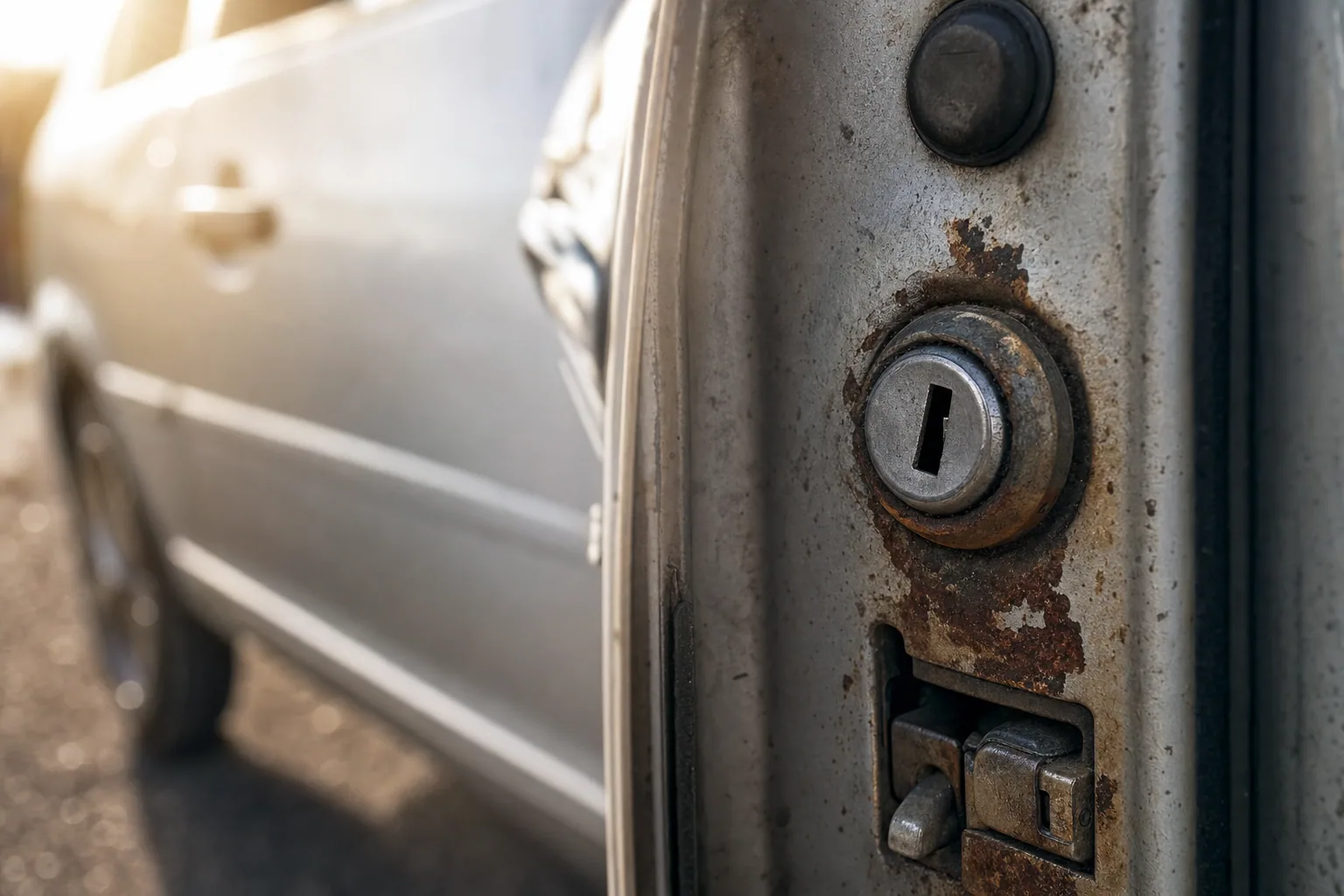
California's heat, sun, and occasional moisture can take a toll on your car's locks. UV exposure can crack the plastic components of locks, and rust can develop inside the cylinder even if you don't see it on the outside. If you live in areas near the coast, salt air accelerates corrosion. Heavy rain or even regular car washes can push moisture into lock mechanisms.
If you notice your lock looks discolored, has visible rust, or the plastic trim around it is cracked or faded, the lock internals are probably damaged too.
What to Do When You Suspect Lock Failure
Don't wait until you're locked out on the side of the road. If you notice any of these signs, call a professional locksmith now. A technician can inspect your lock, diagnose the exact problem, and either repair it or replace it before it completely fails.
Depending on the issue, a locksmith might be able to clean out debris, replace worn internal components, or install a new lock cylinder entirely. Some repairs are quick and inexpensive, while full replacement costs more but gives you a brand new, reliable lock.
If you're in Bakersfield, Shafter, Wasco, Delano, or the surrounding areas, Joe's Lock and Key offers professional automotive locksmith services. Our team can handle lock repairs, replacements, and even car key programming if your key itself is the problem. We work with all vehicle types and have the experience to fix whatever your lock issue is.
Prevention Tips for the Future
You can extend the life of your car door locks with some simple maintenance:
- Use your lock regularly. Locks that sit unused actually fail faster because their internal mechanisms don't stay lubricated.
- Keep the lock clean. Don't let dirt and debris build up around the cylinder.
- Avoid forcing your key. If it feels tight, stop and get it checked rather than pushing harder.
- Protect your keys. Worn or bent keys accelerate lock failure.
- Have your locks inspected during routine vehicle maintenance.
Car door locks are one of those things you don't think about until they stop working. But catching the warning signs early means you stay in control of the situation instead of being locked out when you least expect it. If you're seeing any of these signs, don't wait. Call a locksmith who can fix it right and keep you from getting stranded.