
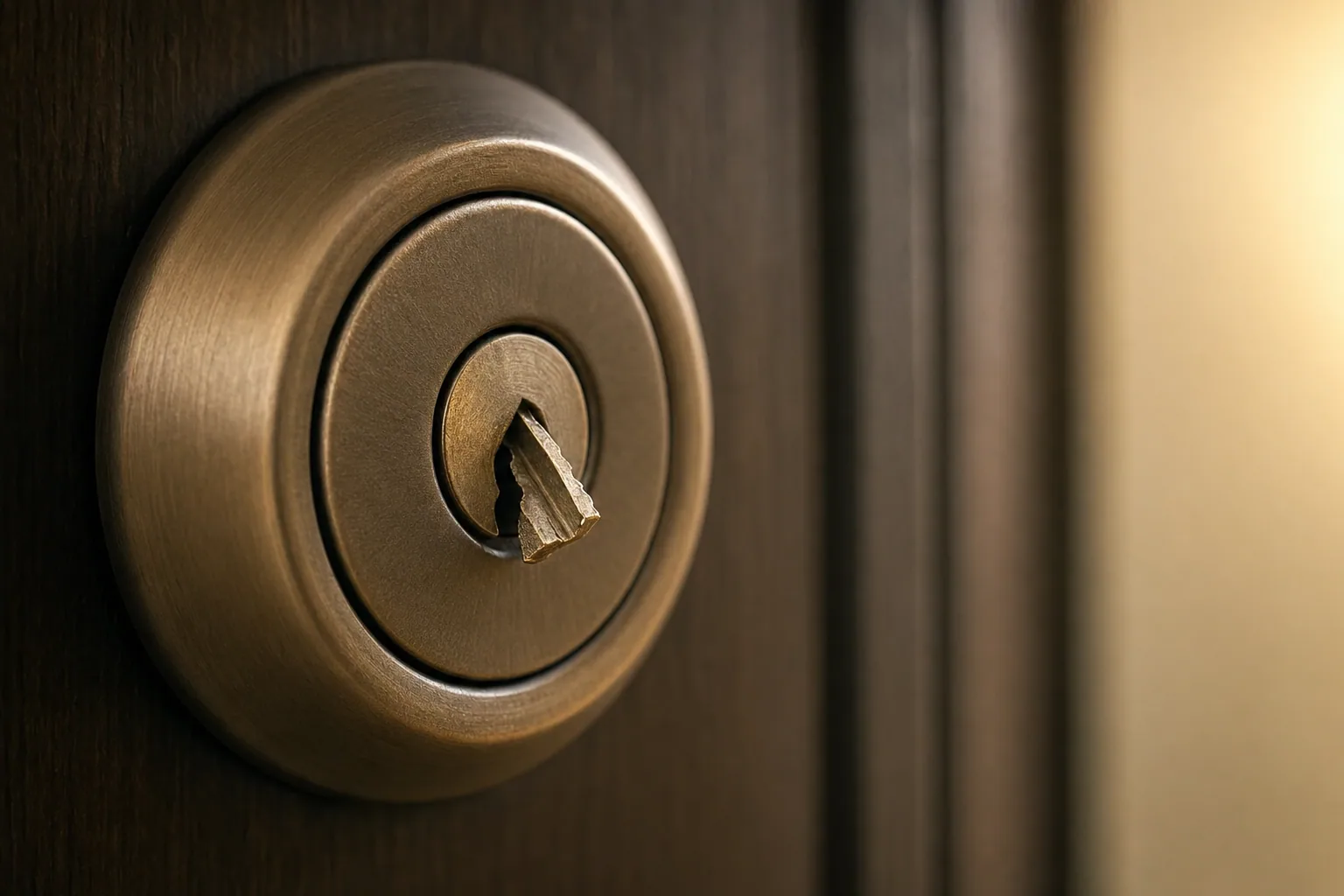
A broken key stuck in a lock is one of those frustrating moments that can catch anyone off guard. Maybe you turned the key too forcefully, or the key was already weakened from age or wear. Either way, you're now staring at half a key in your lock and wondering what to do next.
The good news is that not every broken key situation requires an immediate call to a locksmith. Depending on how much of the key remains visible and the type of lock, you may be able to remove it yourself using simple tools you likely already have at home. The bad news is that if you go about it the wrong way, you can make the problem worse, potentially damaging the lock itself and making professional removal much more complicated.
Let's walk through what you can safely try, what to avoid, and when it's time to bring in the professionals.
How to Remove a Broken Key Extraction from Your Lock
Before you grab any tool and start poking around inside your lock, take a moment to assess the situation. Is there enough of the key protruding from the lock to grab? Can you see the break clearly? The more visible the broken key fragment, the easier removal will be.
Here are the safest methods to try first:
Method 1: Use a Thin, Flat Tool
If a significant portion of the broken key is sticking out of the lock, your best bet is to use a thin, flat tool to gently dislodge it. A flathead screwdriver, a butter knife, or even a metal file can work. Here's how:
- Insert the flat tool alongside the broken key fragment, angling it to apply gentle upward or outward pressure.
- Work slowly and deliberately. Do not force it.
- If the key doesn't budge after light pressure, stop and try another method. Forcing it risks damaging the lock's internal pins.
- Once you've created some leverage, the key fragment should slide out.
The key is patience. A few minutes of gentle work beats a few seconds of aggressive force that could jam the key deeper or break off another piece.
Method 2: Apply Lubricant
Sometimes a broken key gets stuck because of friction or rust. Applying a lubricant can help it slide free more easily.
Try spraying lock lubricant (or even WD-40) directly into the keyhole. Let it sit for a minute or two to penetrate, then attempt to wiggle and gently pull the broken key fragment out using tweezers or needle-nose pliers if enough of it is visible.
If you don't have commercial lubricant on hand, graphite powder is another option that many locksmiths use. Just don't use thick oils like cooking oil, as they can gum up the lock further.
Method 3: Use Tweezers or Needle-Nose Pliers
If the broken key piece is long enough to grip, tweezers or needle-nose pliers can give you the hold you need to pull it straight out. Gently close the tool around the visible portion of the key and pull steadily and evenly. Avoid jerking motions, which can break it into smaller pieces or snap the pliers.
What NOT to Do
When you're dealing with a stuck key in a lock, it's just as important to know what not to do as it is to know what to do.
- Do not drill the lock if you're renting or if you want to preserve the lock.
- Do not use excessive force or pound on the lock with a hammer.
- Do not attempt to use super glue to bond with the broken key. If it doesn't work, you're left with a lock filled with adhesive that's nearly impossible to clean.
- Do not wiggle a stuck key aggressively side to side. This can break it further or push fragments deeper into the mechanism.
- Do not ignore the problem and hope it goes away. A broken key left in a lock can eventually corrode or allow dirt into the mechanism, making it harder to extract later.
When Your Stuck Key in Door Needs Professional Help
There are several situations where attempting DIY extraction is a waste of time and energy. Knowing when to call a professional saves you frustration and money.
You should contact a locksmith if:
- Very little of the broken key is visible or none at all.
- You've tried gentle removal methods and the key remains stuck.
- The lock is valuable, antique, or part of a high-security system.
- You've already damaged the lock trying to remove the key.
- The key broke deep inside the lock, out of reach of simple tools.
- You need the lock to remain functional after key removal.
A professional locksmith has specialized tools designed specifically for broken key extraction. These tools let them see inside the lock, apply precise pressure, and remove the fragment without damaging the internal mechanisms. With over five decades of experience, Joe's Lock and Key is equipped to handle even the trickiest extractions in Bakersfield and surrounding areas.
Why Keys Break in the First Place
Understanding what causes a key to snap can help you prevent it from happening again.
- Weak or damaged key metal: Older keys or keys made from lower-quality materials are more prone to breaking.
- Worn or misaligned locks: A lock that doesn't line up properly can bind, placing extra stress on the key.
- Too much force: Turning a key with excessive pressure is a common cause of breakage.
- Metal fatigue: Keys that are bent, twisted, or stressed repeatedly can develop stress fractures that eventually snap.
- Corrosion or rust: Environmental exposure weakens the key's structural integrity.
Prevention Tips for the Future
Once you've dealt with a broken key, take steps to avoid it happening again.
- Handle keys gently. Turn them with steady, moderate pressure, never with a sharp jab.
- If a key feels stuck, stop and apply lubricant rather than forcing it.
- Keep your locks clean and well-maintained. A sticky lock puts extra strain on your key.
- Have worn or old keys replaced with new ones before they fail.
- Consider duplicating important keys on quality blanks from a trusted locksmith rather than a hardware store.
- If you have an older lock or multiple keys sticking, the lock itself may need replacement or repair.
What to Do After the Key is Out
Once you've successfully removed the broken key fragment, don't just move on. Take a moment to check the lock:
- Can the lock still turn smoothly with another key?
- Is there any visible damage to the keyhole?
- Does the lock feel binding or rough?
If the lock feels off or a key won't turn smoothly after extraction, it may have internal damage. This is the time to call a professional for inspection and repair. A locksmith can assess whether the lock can be fixed or if replacement is the better option.
Moving Forward
A key snapped in a lock is annoying, but it's rarely a permanent crisis. In most cases, a little patience and the right technique gets the fragment out without professional help. But if you're stuck, if the key is lodged deep, or if you're worried about damaging your lock, reach out to Joe's Lock and Key right away. We offer 24/7 emergency service in Bakersfield, Shafter, Wasco, Delano, and surrounding areas, with fair pricing and no hidden fees. Don't let a broken key ruin your day. Give us a call.